For a permanent exterior installation, metal letters outlast acrylic: aluminum and stainless steel hold their finish for a decade or more in sun and weather, while acrylic faces yellow, craze and can crack in the same exposure. But “acrylic or metal” is usually the wrong question, because the letters that survive longest are hybrids — metal returns carrying acrylic faces, each material doing the job it is best at. Here is what actually fails, and which material survives it.
The Two Materials, Properly Understood
Acrylic is the face material of the sign industry: cast or extruded PMMA, 3 to 6 mm, translucent and printable. It is what makes a front-lit letter glow evenly. It is also a plastic — UV exposure, heat cycling and solvent cleaning all attack it over time.
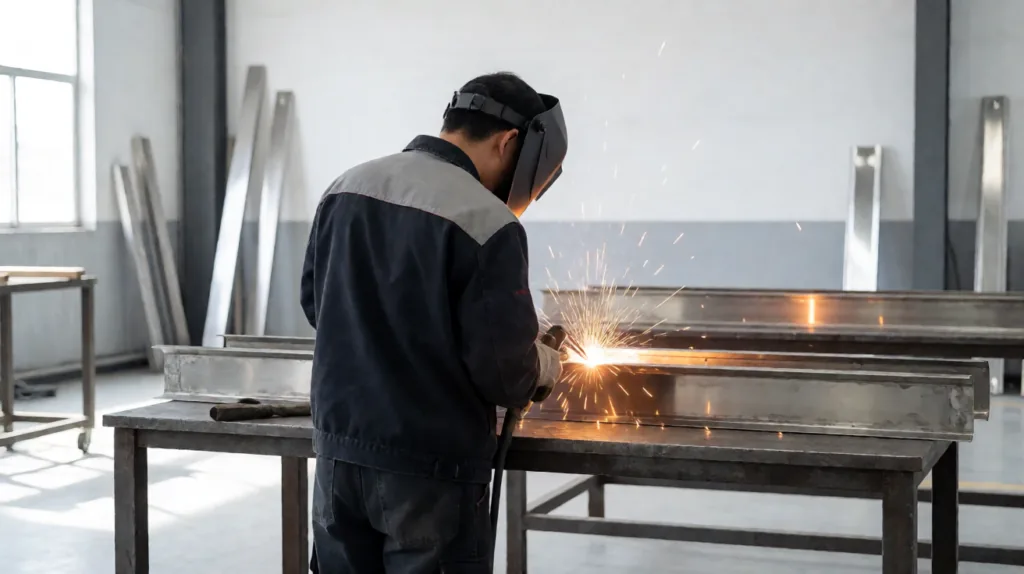
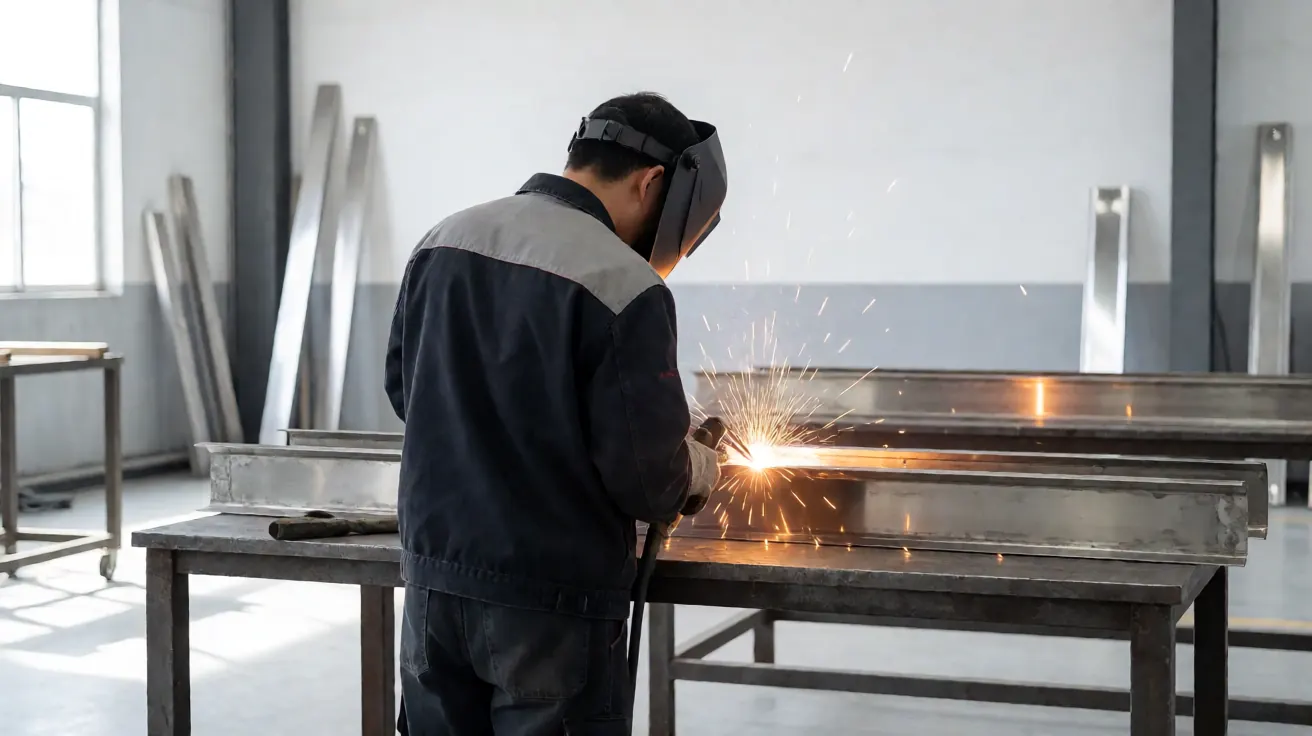
Metal is the structure and the visible skin: aluminum (powder-coated, anodized or raw), stainless steel (brushed or polished), and occasionally brass or bronze where patina is the point. Metal does not glow, so it cannot be the face of a front-lit letter — it is the return, the trim, the backplate and the halo-lit shell.
What Actually Goes Wrong Outdoors
| Failure mode | Acrylic | Aluminum | Stainless |
|---|---|---|---|
| UV yellowing | Yes — cast resists longer than extruded | No, but powder coat chalks | No |
| Heat / cold cycling | Expands and contracts; can craze or crack | Stable | Stable |
| Salt air (coastal) | Unaffected by salt, affected by sun | Can pit if coating is breached | 304 shows tea staining; 316 resists |
| Impact | Cracks, does not dent | Dents, does not shatter | Dents, holds finish |
| Cleaning chemicals | Alcohol and ammonia haze it | Tolerates most cleaners | Tolerates most cleaners |
| Repairability | Replace the panel | Repaint or replace the return | Repolish or replace |
Read that table as a division of labour: acrylic wins on light transmission and loses on UV life; metal wins on UV and weather and loses on light. A well-built sign uses each for its strength.
Weight, and Why It Decides More Than You Think
A 24-inch stainless letter is heavy — the wall, the substrate and the mounting method all have to carry it. Aluminum is roughly a third of the weight for the same shell, which is why it dominates fascia work. Acrylic faces weigh almost nothing and are the only practical choice for large illuminated panels. If you are mounting on EIFS, brick or a curtain wall, weight decides the material before aesthetics do.
Lighting Sets the Rules
- Front-lit letters need a light-transmitting face: acrylic or polycarbonate. A solid metal face cannot be front-lit.
- Halo-lit letters need an opaque shell and an open back: metal is the natural choice, and it is what gives the crisp halo outline.
- Non-illuminated dimensional letters can be all metal, or acrylic-faced for colour without lighting.
- Flat cut lettering is usually aluminum or stainless plate — cheap, sharp, no depth.
Finishes, and the Cost Logic Behind Them
Metal gives you brushed, polished, anodized and powder-coated surfaces; the finish, not the alloy, often sets the price. Powder coating on aluminum is the workhorse for painted brand colours. Brushed stainless is the premium look for halo-lit work. Polished finishes look best for a year and then show every fingerprint unless they are maintained.
Acrylic gives you colour through the material or printed on the back, which is why front-lit letters can match a brand colour precisely and still glow evenly. That colour fidelity is the reason face panels stay acrylic even on signs whose shells are steel.
Which to Specify
| Project | Specification | Reasoning |
|---|---|---|
| Storefront fascia, illuminated | Aluminum returns + acrylic faces | Light transmission with a weather-stable shell |
| Premium halo-lit branding | Stainless returns, open back | The halo needs an opaque metal shell |
| Coastal installation | 316 stainless or marine-grade coating | Salt resistance, not just UV resistance |
| Large backlit panel | Acrylic or polycarbonate face, aluminum frame | Weight and even light spread |
| Interior reception lettering | Acrylic or aluminum, unlit | No weather exposure to worry about |
| Budget-driven exterior | Aluminum returns + acrylic faces | Lowest cost that still survives outdoors |
FAQ
Will acrylic letters yellow?
They can, with enough UV. Cast acrylic resists far better than extruded, and a UV-stable grade is what we specify for exterior faces. Expect colour shift over many years rather than months; if a face does yellow, it is replaced as a panel without touching the letters.
Is stainless always better than aluminum?
No. Stainless is heavier, harder to work and more expensive, and its advantage is corrosion resistance in harsh or coastal environments. For painted letter shells on a normal inland storefront, powder-coated aluminum is the better value and performs well.
Can I mix materials on one sign?
That is the standard build. Metal returns, acrylic faces, aluminum raceway, sometimes a stainless trim. Mixed materials are normal; mismatched expansion and dissimilar-metal contact are the things to avoid, and that is a fabrication detail we handle in the shop drawings.
What about polycarbonate instead of acrylic?
Polycarbonate is tougher and resists impact better; acrylic transmits light better and resists UV-driven yellowing better. For high-vandalism locations polycarbonate earns its place; for a standard illuminated face, acrylic is the usual specification.
How do I keep either one looking new?
Wash with water and a mild detergent, never ammonia or alcohol on acrylic, and never an abrasive pad on a brushed finish. Beyond cleaning, both materials are maintenance-free apart from replacing LED modules when they eventually fail.
Related
- Channel letters — front-lit, halo-lit, mini and push-thru, built to your spec.
- Front lit vs halo lit — how the lighting choice changes the shell material.
- Channel letters vs LED neon — choosing the format before the material.
- LED modules & supplies — what goes inside the shell.
Get a Quote
Tell us the exposure — inland or coastal, sun or shade, wall type — and we will recommend the material and finish, then quote it with the mounting drawings included.
Last updated: November 2026
Leave a Reply