Channel letters are the right choice for a storefront that must be read from the street; LED neon is the right choice for an interior wall read from a few feet away. The deciding factor is not style, it is distance and light: channel letters are three-dimensional boxes that throw light outward and hold a logo at 100 feet, while LED neon is a single flexible line of light that shines at close range and reads as texture, not as an illuminated sign. Most businesses end up using both — letters outside, neon inside.
What Each One Actually Is
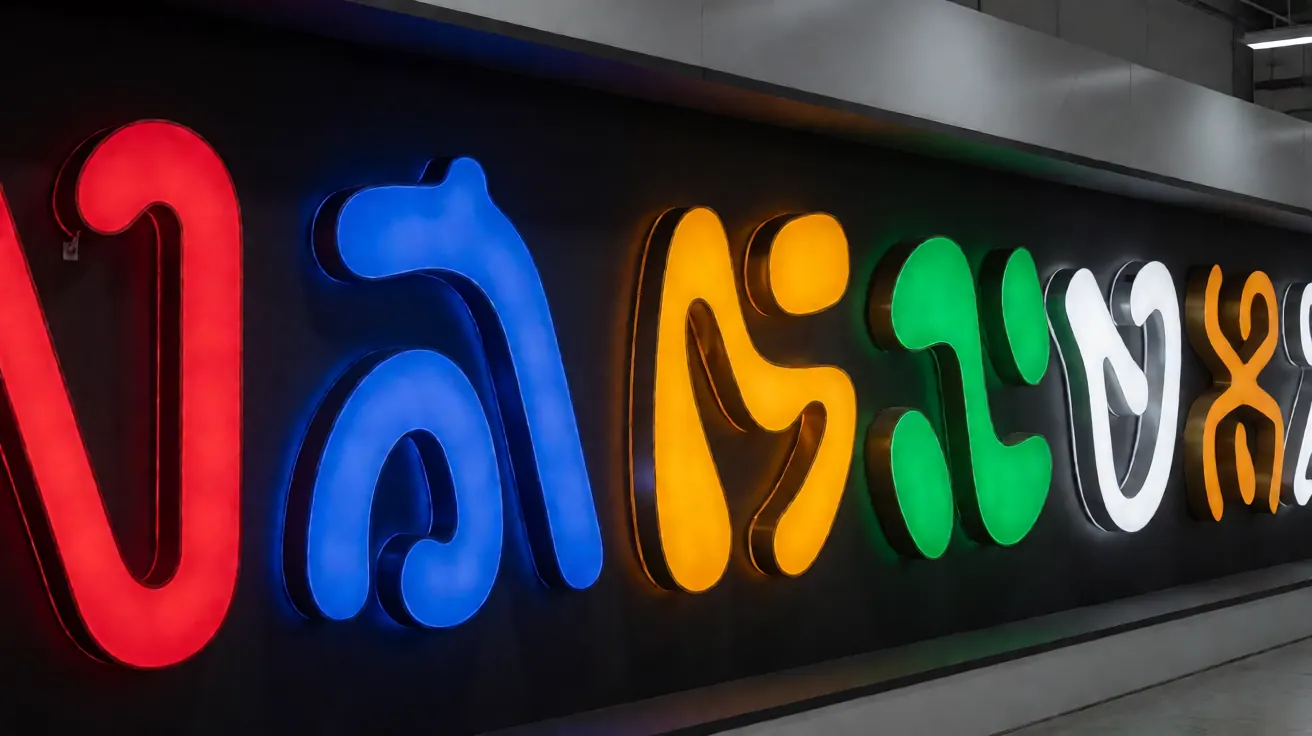
Channel letters are fabricated metal boxes — typically aluminum returns with an acrylic face — each shaped as a finished letter, lit from inside by LED modules. Front-lit letters glow through the face; halo-lit letters glow against the wall behind them. They are electrical fixtures: they need a power feed, a raceway or individual penetrations, and usually a permit.
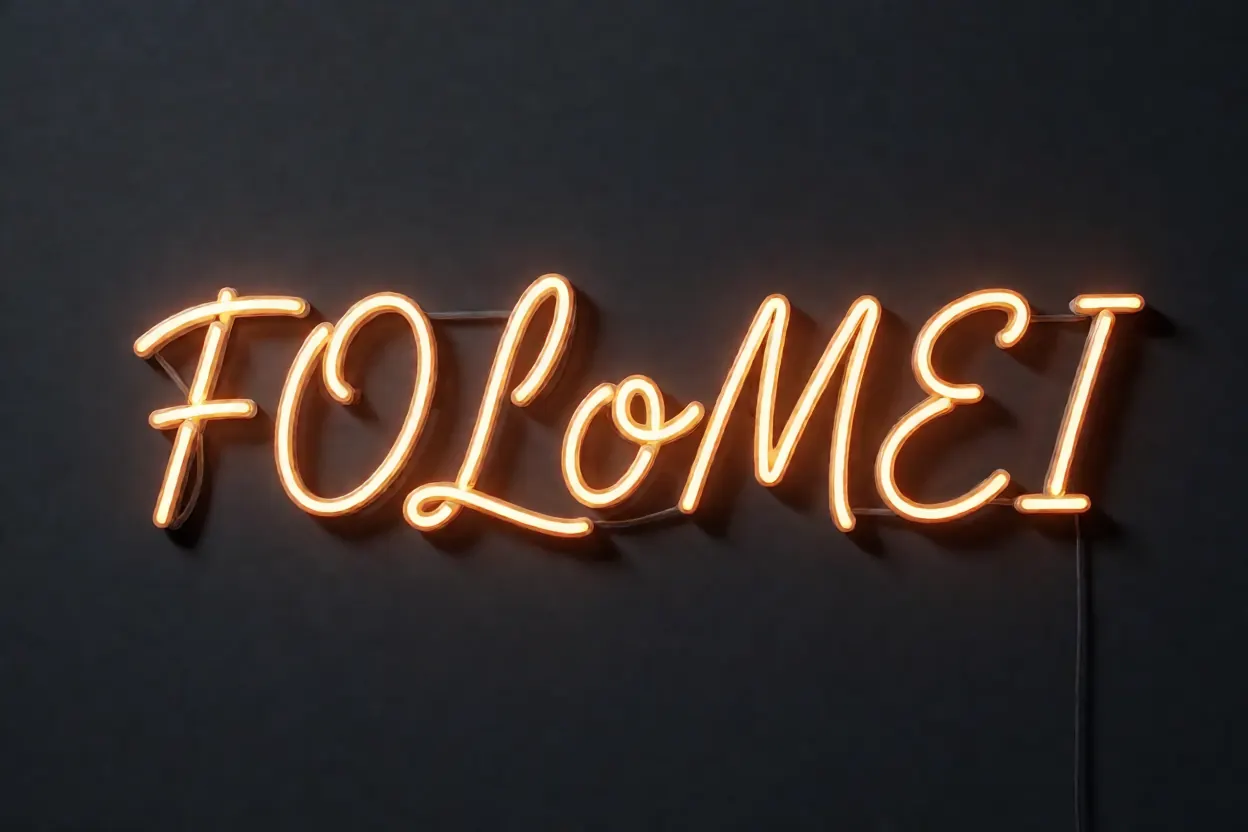
LED neon is a flexible silicone strip of LEDs bent along a single-line path — the stroke of your logo or lettering — mounted on a cut-to-shape acrylic backer. It runs on 12 or 24 volts, plugs into a wall socket like a lamp, and ships folded or flat. It has no depth and no face to illuminate: the line itself is the light.
Side-by-Side
| Channel letters | LED neon | |
|---|---|---|
| Form | 3D fabricated letter boxes, 60–200 mm deep | Single-line flex tube on a flat backer |
| Legibility at distance | Strong — designed for 50–300 ft | Weak past about 20–30 ft |
| Light behaviour | Even panel of light behind a face, or a wall halo | A bright line; the surrounding area stays dark |
| Typical use | Storefront fascia, pylon, building identification | Interior walls, bars, events, logo features |
| Power | Hard-wired, dedicated circuit, permit usually required | Low voltage, plugs into a standard socket |
| Weather rating | Built for permanent exterior exposure | Indoor standard; IP-rated builds for outdoor |
| Repair | Replace a module or a face panel on site | Swap a segment or the whole piece |
| Graphic change | New face or new letters | New piece, or re-bend the design |
| Minimum stroke | Any letterform the drawing allows | Fine script must be thickened to be buildable |
Distance Is the Real Test
Stand where your customer stands. If they are in a car at an intersection, or across a parking lot, the sign has to be legible in under two seconds: that is channel letters, and it is why every fuel station, pharmacy chain and QSR uses them. If they are sitting at a bar looking at the wall, the sign is decor — the glow matters more than the reading, and LED neon does it better and cheaper.
A rough rule we use on real projects: if the intended viewing distance is over 30 feet, do not use neon for the primary identification. It will look bright in a photo and disappear on the street.
How the Cost Structures Differ
Channel letters are priced per letter, and the price is driven by letter height, lighting type, quantity and destination. Our 2026 cost guide breaks the factory-direct ranges down by height and quantity. The cost is concentrated in fabrication — bending and welding aluminum, forming faces, wiring modules — plus the electrical work and permit on your side.
LED neon is priced per piece: the length of tube in the design, the backer, the power supply and the packing. There is no electrical contractor in the loop and no permit in most jurisdictions, because it is a plug-in low-voltage fixture. That is why a neon piece can be cheaper than a small set of letters even though the material cost per metre is higher.
Where Each One Wins
| Setting | Better choice | Why |
|---|---|---|
| Street-facing storefront fascia | Channel letters | Distance legibility, permit-compliant exterior fixture |
| Bar or restaurant interior wall | LED neon | Atmosphere, close viewing, no electrical work |
| Multi-tenant building identification | Channel letters or monument | Must be read from the road and at night |
| Trade show booth | LED neon | Folds flat, re-skins per event, plugs in |
| Event or wedding backdrop | LED neon | Portable, one-off name or phrase |
| Franchise rollout across cities | Channel letters | Identical build, documented spec, serviceable |
| Home decor or gifts | LED neon | Low voltage, small format, no install |
Using Both on One Project
The pattern we see most often in hospitality and retail: channel letters or a lightbox on the exterior for identification, LED neon on the interior wall for the photograph people post. Same brand, two jobs. The only rule is to keep the letterforms consistent, because the neon version will be judged against the exterior sign in every photo.
Permits and Electrical
Exterior illuminated signage is regulated almost everywhere in North America: sign permits, sometimes electrical permits, and increasingly energy or light-trespass limits. Channel letters are built to accept NRTL-listed components and we supply mounting and wiring drawings for the permit application. LED neon, as a plug-in low-voltage fixture, usually falls outside signage permitting when used indoors — but check with your local authority before you assume that for an exterior installation.
FAQ
Can LED neon replace my storefront sign?
Only if the sign is meant to be read at close range. Neon produces a bright line, not an illuminated panel, and it loses legibility quickly with distance. For a fascia viewed from the street, channel letters or a lightbox will always outperform it.
Which one is cheaper?
For small interior pieces, neon usually is, because there is no electrical work or permit. For a storefront at street scale, channel letters win on cost per square foot of readable sign — a neon piece large enough to read from the road is mostly empty acrylic.
How long does each last?
Both are long-life if built properly. Channel letters are serviceable: a failed LED module is replaced in minutes without removing the sign. Neon flex is rated in the tens of thousands of hours; if a section fails it is swapped or the piece is rebuilt.
Can I use neon outdoors?
Yes, with an IP-rated outdoor build: sealed ends, gasketed connectors, weather-rated power supply and a coated backer. Tell us the exposure — covered patio, coastal wall, full sun — and we spec the sealing for it.
What files do you need to quote either one?
Vector artwork (AI, EPS, PDF or SVG). For letters we also need the target letter height, quantity and mounting method; for neon, the finished size, colour and whether you want a dimmer.
Related
- Custom LED neon signs — made to your artwork, indoor or IP67 outdoor.
- Channel letters — front-lit, halo-lit, mini and push-thru.
- Front lit vs halo lit channel letters — the other choice you will have to make.
- What channel letters cost in 2026 — factory price tables and landed cost.
Get a Quote on Either
Send your artwork and the viewing distance you need to cover — we will tell you which of the two actually works, and quote both so you can compare.
Last updated: November 2026
Leave a Reply